Sensemitter is now Emhance.
Read more

Articles
QA Tester vs. Playtester: What's the Difference?
Written by:
Emer Rutherford
|
Marketing Generalist
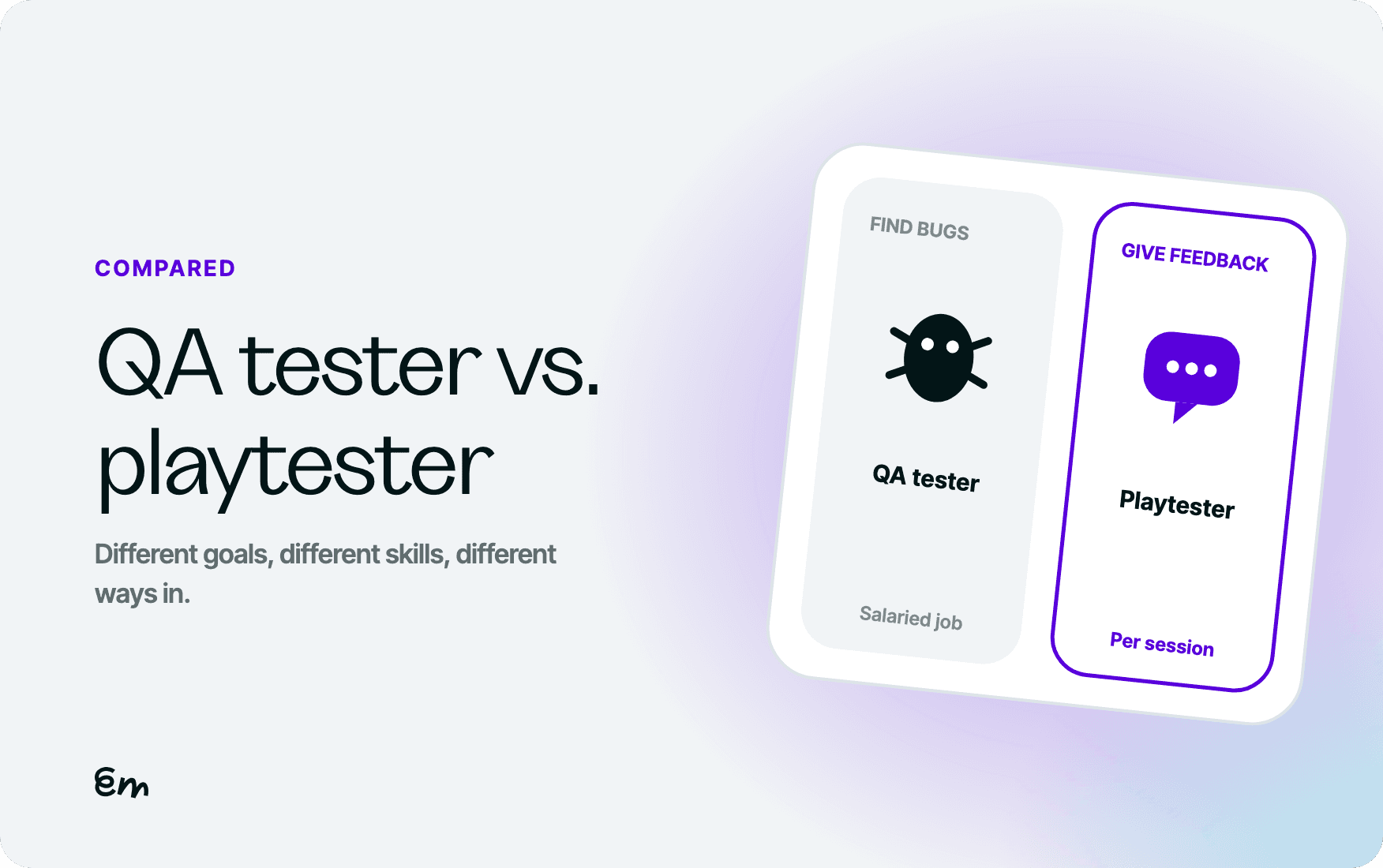
QA testing and playtesting both get called "game testing," and job postings, forums, and search results mix the two constantly. They're different jobs with different goals, different skills, and different ways in. Neither is a lesser version of the other. They're just not the same thing.

What QA testing involves
A QA tester's job is to find what's broken. That means following test scripts, hunting for crashes, checking that a fix didn't break something else, and logging every issue in a bug tracker with clear steps to reproduce it. The target is the game's code and systems, not the player's experience of them.
It's usually a structured, in-house or contract role, reporting to a QA lead or producer. The work rewards precision and patience: running the same sequence repeatedly, checking edge cases nobody else thought to try, and writing a bug report clearly enough that a developer can reproduce the problem without talking to you first.
What playtesting involves
A playtester's job is to react. You play the game the way an ordinary player would, and report on what you noticed: what was confusing, what felt satisfying, where your attention dropped, what you'd change. There's no script to follow and no bug list to fill out, unless something breaks along the way.
Playtesting is often gig-based rather than a standing job: sessions booked one at a time, sometimes through an ongoing panel, sometimes as part of a single study. What it rewards is honest, specific reactions delivered consistently, not technical knowledge of how the game is built.
QA tester vs. playtester, side by side
QA tester | Playtester | |
Goal | Find bugs and technical issues | React to the player experience |
Day-to-day | Test scripts, bug tracker, re-testing fixes | Play a session, report feedback |
Skills rewarded | Precision, patience, clear technical writing | Honest, specific, consistent feedback |
How you're paid | Varies by role, usually salaried or hourly | Usually per session |
Where it happens | Studio, publisher, or QA outsourcing firm | Often remote, from your own device |
Career path | QA lead, producer, technical roles | Player research, UX, and related roles |
Barrier to entry | Resume, growing technical expectations | Low. No portfolio or experience required |
Which one fits you
If you like finding exactly what's wrong and can describe it precisely enough for someone else to reproduce it, QA testing rewards that directly, and it's the path with a more defined ladder if you want testing to become a long-term technical career.
If you're the person your friends ask "does this feel off to you?" and you can put your finger on why, playtesting rewards that instinct. It's lower-commitment to start, doesn't require a resume or technical background, and works as flexible paid work rather than a job search.
Plenty of people do both at different points, or try playtesting first to see if testing in general is something they want to pursue further. What Is a Beta Tester? covers a third, unpaid variant of this same confusion, if you're trying to place a listing that used that term instead.
If you're drawn to the playtesting side, here's how to start: Emhance's playtester application.