Sensemitter is now Emhance.
Read more

Playtesting
How changing when an ad appeared drove 8% more revenue for AppGeneration

AppGeneration wanted more ad revenue from Triple Match without losing players. The obvious way to get it is to run more ads, and more ads usually means more friction.
They worked with Emhance to test different strategies for growing revenue without harming retention.
Results
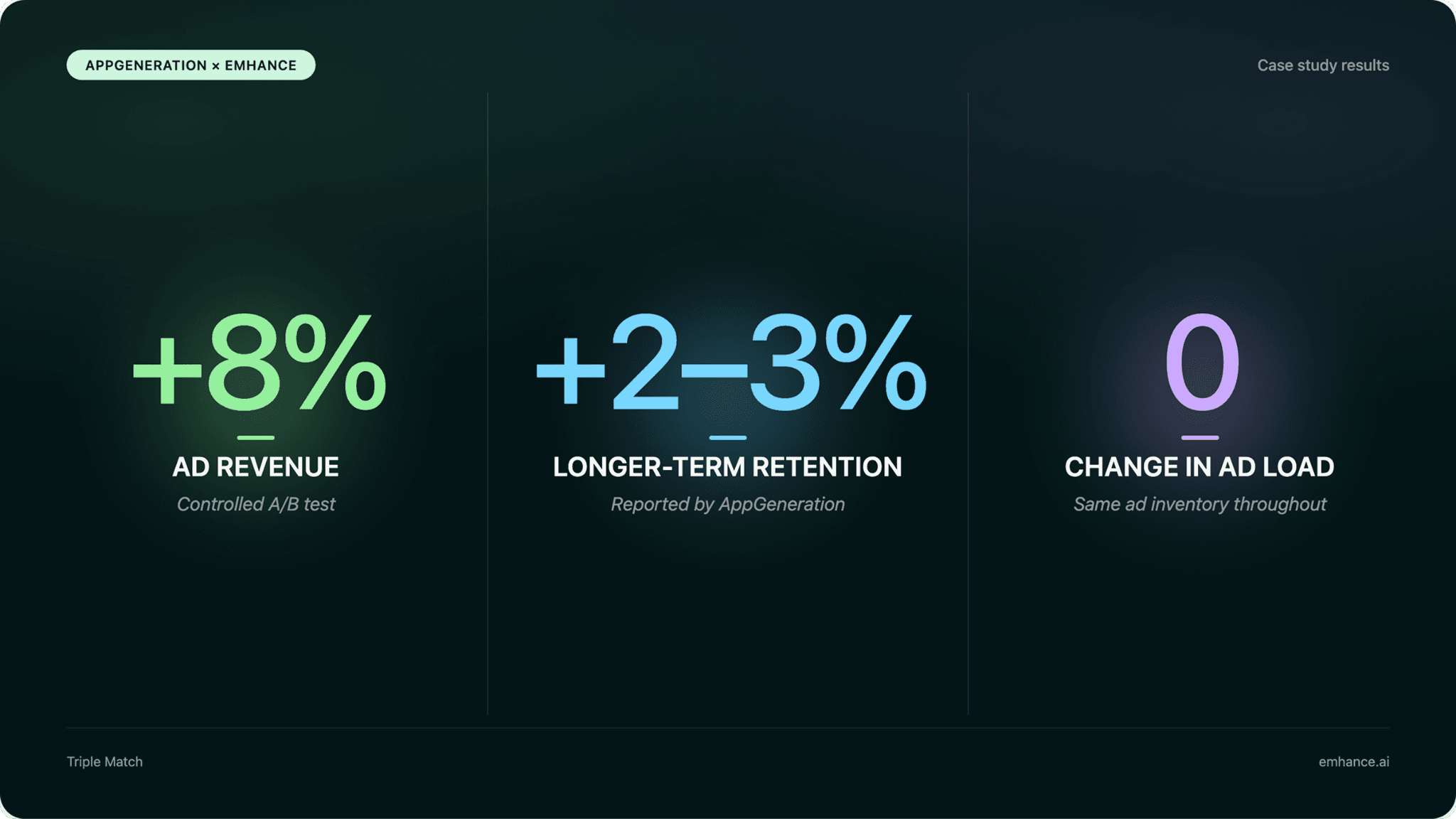
+8% Ad revenue — Controlled A/B test
+2–3% Longer-term retention — Reported by AppGeneration
0 Change in ad load — Same ad inventory throughout
"Our Triple Match A/B test showed 8% revenue increase and slight retention improvement by repositioning interstitial ads. These results were very positive." — Edgar Pereira, Product Manager / Marketing Analyst, AppGeneration
Study Overview
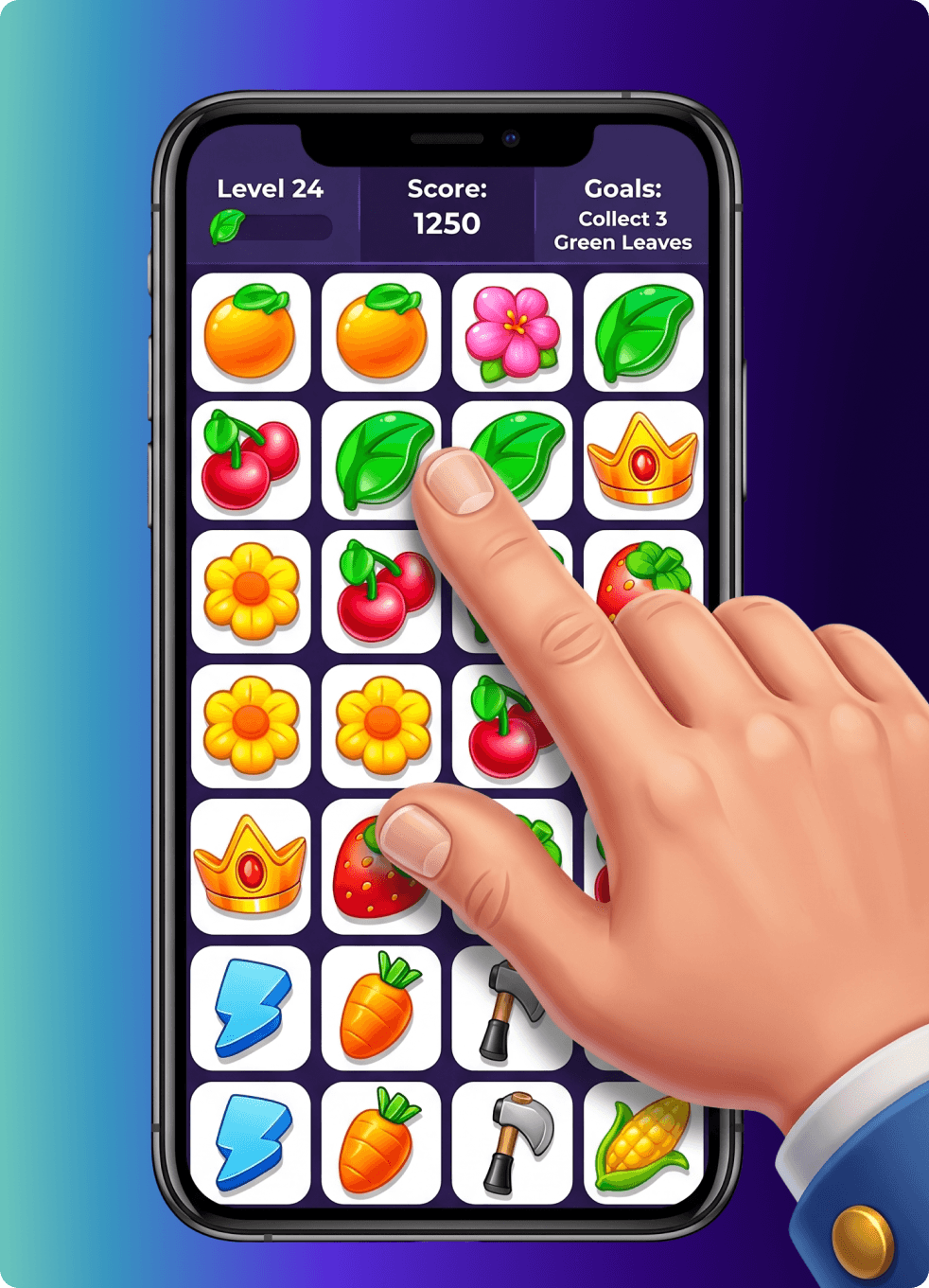
Game: Triple Match
Timeline: 2025
Participants: 6 players
Age: 35–55
Gender: 3 male, 3 female
Geography: USA, UK
Player profile: New to Triple Match; prefer puzzle and casual games
Method: Intro-interview, 15-minute play session with facial coding and concentration mapping, feedback interview
The Problem: Players disengaged before the ad appeared
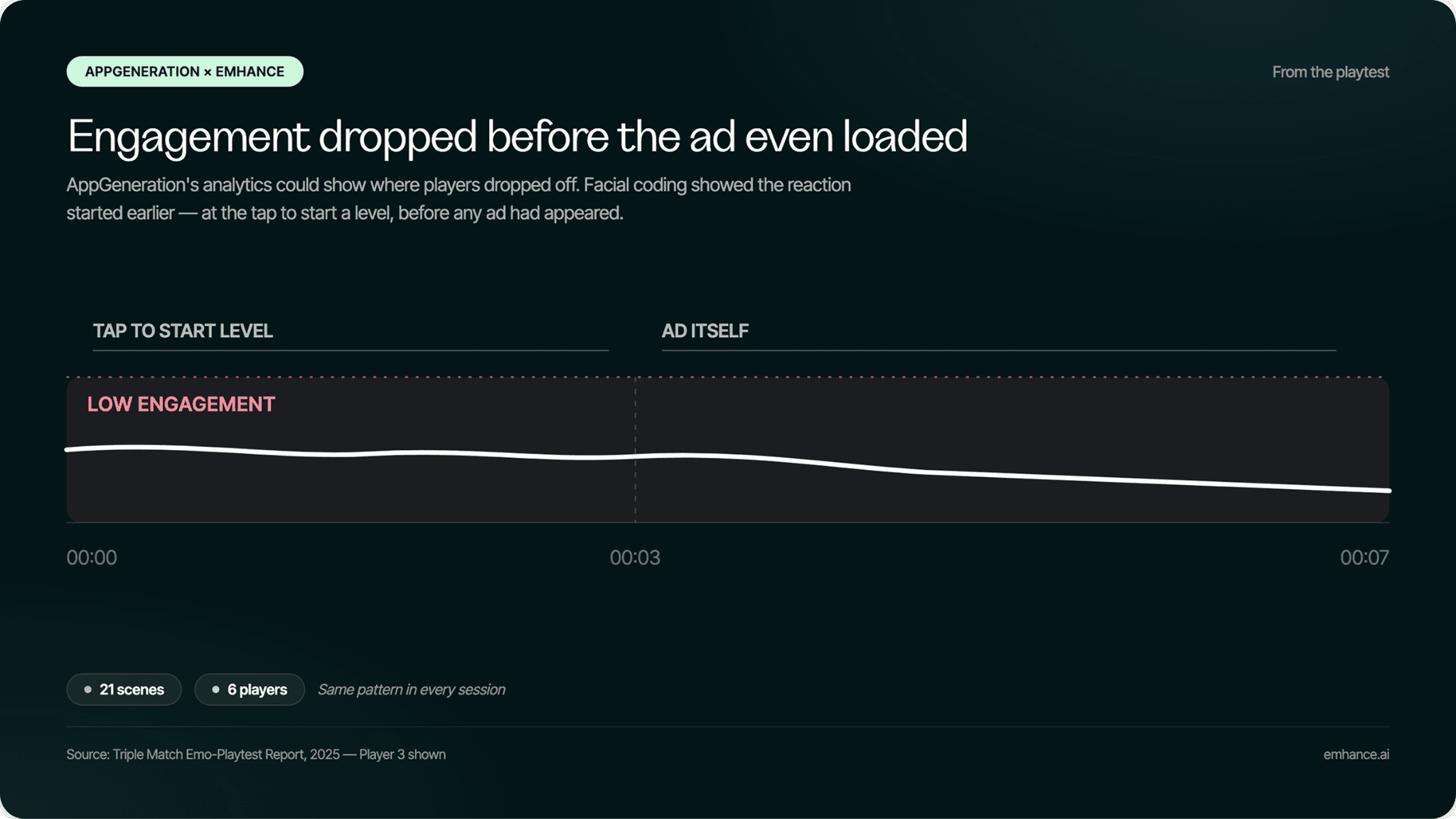
Players hit 5+ interstitial ads in a 15-minute session — one before every level after level 4. They learned the pattern fast. Engagement dropped at the tap to start a new level, before any ad had actually loaded, and stayed down once play resumed.
AppGeneration's analytics could show where players dropped off. It couldn't show that the reaction had already started several seconds earlier — at the anticipation of an ad, not the ad itself.
What Emhance Revealed
Facial coding showed the same drop in engagement across every session. In interviews, players connected it directly to pacing:
"It seems like I was kind of penalized for playing too fast, because the speed at which I was playing it made the ads run longer than I was playing the game." — Player 5
Players weren't reacting to how many ads they saw. They were reacting to when the ad showed up — landing right where finishing a level should have felt like a win, not a toll.
The Intervention
The recommendation coming out of the playtest was specific: move ad placement, so it doesn't cut into momentum going into the next level — and test interstitial frequency directly, rather than assuming volume was the lever.
AppGeneration ran a controlled A/B test on exactly that: repositioning when the interstitial appeared, without reducing the number of ads shown.
Why This Worked
From ad count to ad timing. Analytics could show ad frequency. It took facial coding to show that the ad's position in the play loop — not its frequency — was the actual driver of disengagement.
The ad wasn't the exit door. The moment was. Players weren't objecting to ads existing. They were objecting to the one moment picked for it to appear — right after they'd played well enough to finish a level.
No cut to inventory required. The fix didn't touch how much monetization sits in the game. It changed where it sits in the sequence.
Takeaway
AppGeneration assumed more revenue meant fewer ads, or more friction for players. It didn't. Ad revenue and retention moved together once the ad was repositioned — with the same ad inventory throughout.