Sensemitter is now Emhance.
Read more

Articles
Breakdown of fun and how it works in mobile games

Emhance measures and strengthens player engagement by combining neuroscience, behavioural observation, and real-time emotional analysis. The objective is straightforward: understand how players experience a game before changes reach the live audience.
Player satisfaction underpins retention, monetisation, and long-term growth. In an overcrowded mobile market where mechanics are rapidly replicated, sustainable success depends on disciplined iteration rather than intuition.
Most teams rely heavily on product analytics. These tools measure what happened after a feature shipped. They rarely explain why players reacted the way they did, or how to refine the experience before rollout. That gap creates cost and delay.
We built our methodology to address that gap.
Moving beyond post-launch analytics
Our approach allows teams to test gameplay content, mechanics, and flows prior to implementation. We combine:
Facial expression analysis
Gaze tracking
Behavioural session mapping
These signals are translated into structured engagement metrics that reflect moment-by-moment player experience.
Originally developed in other consumer industries, our methodology has been adapted specifically for interactive entertainment, where pacing, agency, and reward timing are central to engagement.
What “fun” actually looks like
Engagement is not the same as positivity.
In one study of a competitive mobile shooter, a player’s character was unexpectedly eliminated by a level hazard. On paper, it was a failure state. In practice, the player reacted with visible intensity and excitement. The unexpected interaction strengthened immersion rather than weakening it.
Challenging genres operate on similar principles. Frustration can coexist with strong engagement. The relevant question is not whether a moment is pleasant, but whether it captures attention and sustains involvement.
For this reason, we focus on measuring emotional intensity over time. Healthy engagement fluctuates. Peaks and troughs are expected. What matters is that the overall trajectory supports immersion rather than flatlining into disengagement.
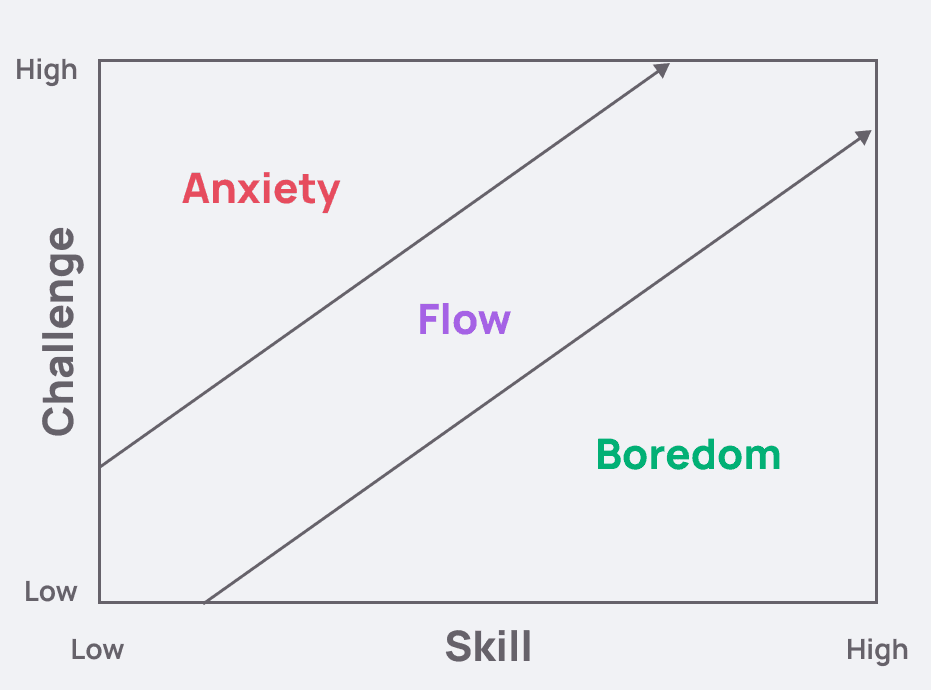
Designers are familiar with the flow model: balancing skill and challenge to avoid boredom or anxiety. Emotional tracking provides a live behavioural counterpart to that theory. Instead of assuming where engagement rises or falls, we observe it directly.
How the system works
Our framework combines three neural networks supported by human analysis:
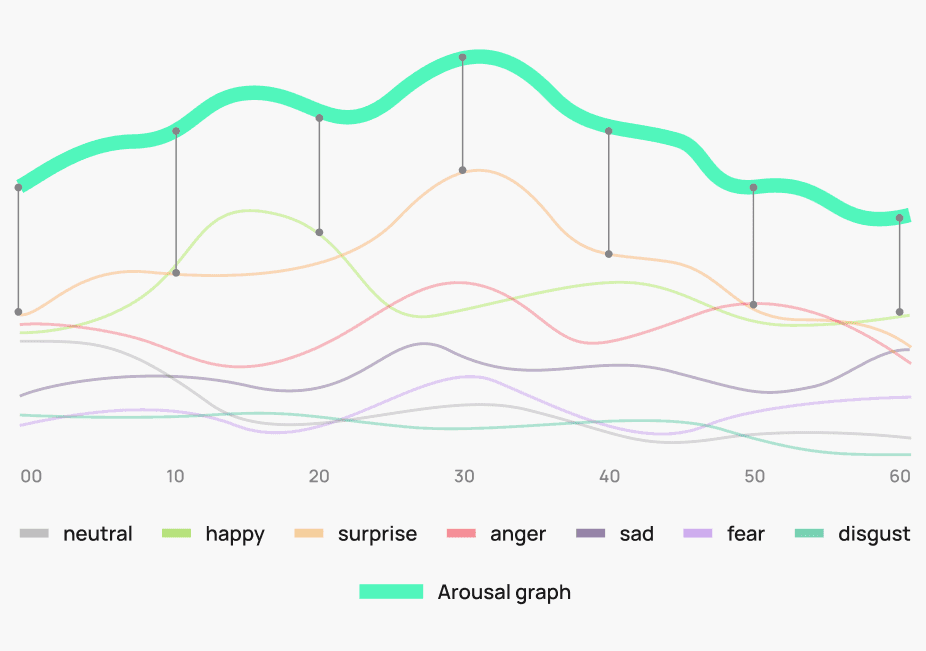
Baseline modelling and emotion detection
The first network establishes an individual baseline and detects shifts across seven core emotional categories based on the work of Paul Ekman.Gaze and visual attention tracking
The second network captures eye movement patterns and visual fixation points.Signal aggregation and structuring
The third network converts second-by-second data into interpretable engagement curves and annotated reports.
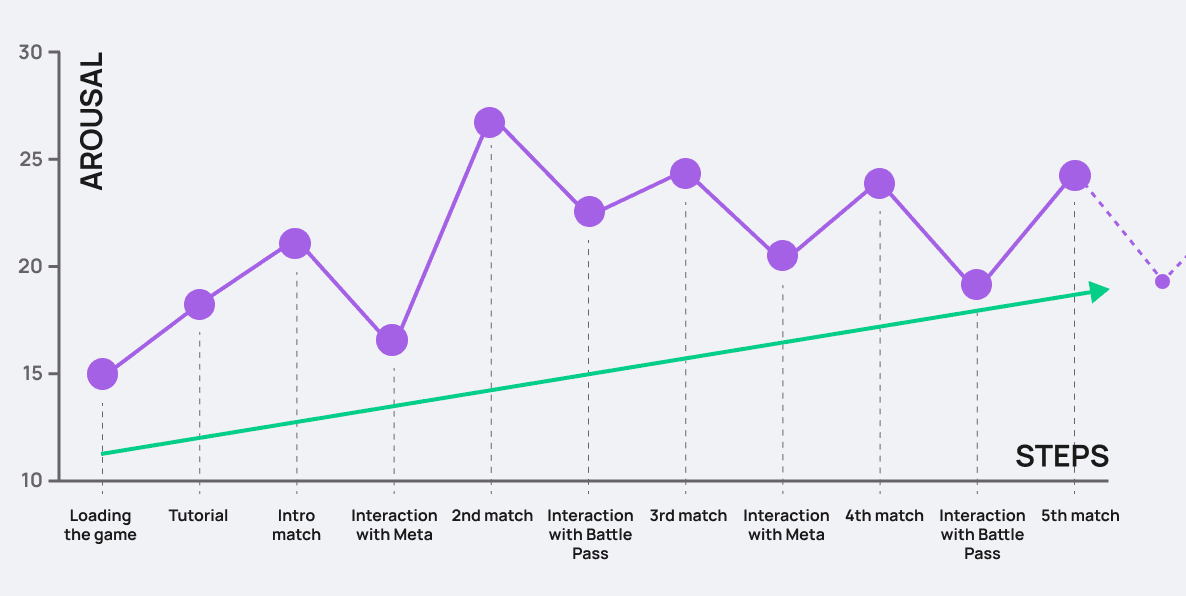
Human analysts then review synchronised gameplay footage alongside emotional and attention data to identify patterns, contextualise spikes or drops, and eliminate artefacts.
We filter out noise such as blinks, speech interference, and non-game-related distractions to ensure data integrity.
The result is structured, observable engagement data that complements — rather than replaces — behavioural analytics.
Why this signal is different
Survey responses are shaped by memory and self-perception. Players may unintentionally rationalise their behaviour or frame their experience in socially desirable terms.
Emotional expression during play is less mediated. It captures immediate reaction rather than retrospective explanation.
By combining real-time tracking with post-session qualitative feedback, we can distinguish between:
Moments players say were important
Moments that actually shifted engagement
Example: timing friction in FTUE
In a first-session study of an action title, we identified a structural issue in how the battle pass was introduced.
The feature appeared immediately after a reward was granted, but without sufficient contextual framing. Emotional and attention data showed a drop in clarity at that exact transition point. Players hesitated, not because the system lacked value, but because its logic was introduced out of sequence.
Adjusting the timing and explanatory framing reduced confusion and stabilised engagement during the early session.
These issues are rarely dramatic. They are often sequencing errors, pacing misalignments, or reward-context mismatches. They are also easy to miss in internal testing.
Designing with emotional clarity
Emotion tracking enables teams to:
Diagnose why tutorial conversion underperforms
Compare competitor mechanics at an experiential level
Identify early-session friction before retention suffers
Refine monetisation placement without eroding trust
The goal is not to maximise intensity at all times. It is to shape a deliberate emotional rhythm that supports immersion, clarity, and sustained motivation.
When engagement is observable, design decisions become more precise.
If you want to understand how emotional analytics can inform your next iteration cycle, request a demo of the Emhance platform.