Sensemitter is now Emhance.
Read more

Articles
How Royal Match redefined success without breaking trust

Inside Royal Match: emotional design, strategic pacing, and monetisation without friction
We conducted a full-scale study of Royal Match, developed by Dream Games. With more than 300 million downloads and over $3 billion in revenue according to AppMagic, the title has redefined expectations within the match-3 category.
The objective was not to confirm its success, but to understand the mechanics behind it. We combined real-time emotion analytics with behavioural observation to isolate the design decisions that sustain engagement across both new and long-term players.

The full report explores the findings in detail. Below is a summary of the key insights.
Research structure
Participants were divided into two groups:
Experienced players with more than two months of play history
New players familiar with competitors such as Candy Crush Saga and Gardenscapes, but new to Royal Match
Each participant completed a 20-minute free-play session. Moderators did not intervene. This ensured natural reactions without prompting or bias.
During gameplay, we captured:
Real-time emotional expression
Visual attention patterns
Behavioural progression signals
Afterward, players completed structured follow-up questions aligned to predefined hypotheses. The combination of live emotional tracking and reflective feedback produced a detailed picture of player experience.
What new players respond to
1. Soft onboarding
Royal Match avoids heavy instruction layers. Mechanics are introduced progressively through interaction rather than explanation. Players learn by doing.
This reduces early cognitive load and preserves momentum during the critical first session.
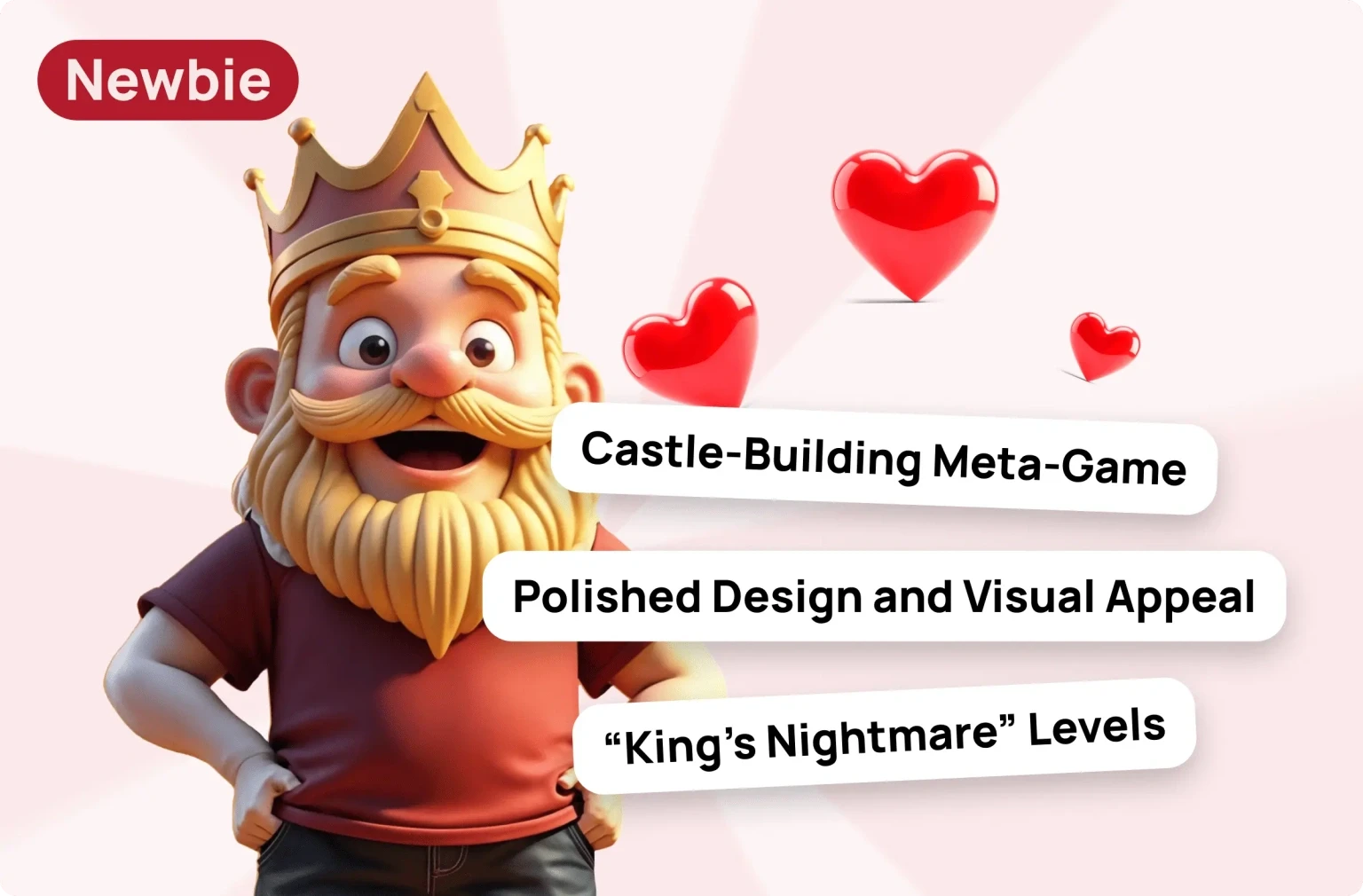
2. Castle-building meta progression
The castle restoration layer provides immediate visual reward. Stars earned in levels convert directly into visible upgrades.
For new players, this creates:
A tangible sense of forward motion
A non-threatening secondary goal
Early emotional reinforcement beyond the puzzle loop
3. Polished audiovisual design
Bright colour palettes, smooth animations, and responsive power-up effects contribute to consistent micro-reward cycles. The pacing alternates between easy and moderately challenging levels, maintaining rhythm without overwhelming beginners.
4. “King’s Nightmare” levels
These branded challenge moments are prominently featured in marketing and present directly in gameplay. New players appreciate seeing advertised mechanics integrated authentically.
This alignment between ad promise and in-game delivery reinforces trust.
What retains experienced players
Long-term players engage with a more layered system.
1. Structured challenge cycles
The game alternates difficulty in a deliberate cadence. Hard levels generate tension; easier ones restore confidence.
This rhythmic modul
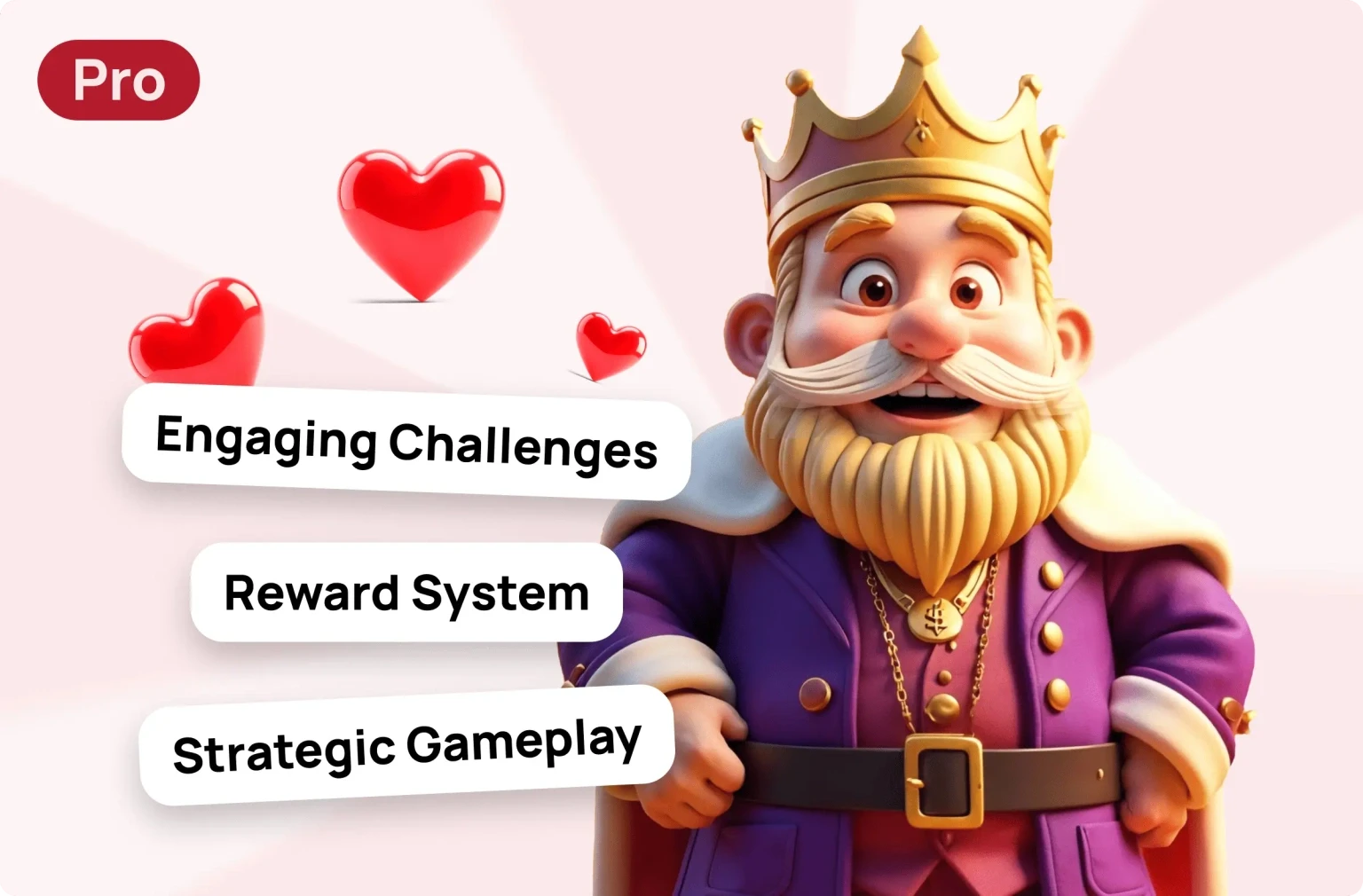
ation sustains emotional variability without fatigue.
2. Competitive overlays
Leaderboards and streak systems introduce light competition. These features add motivation without dominating the core loop.
3. Reward density
Boosters, currency, and bonuses are distributed generously through events, tournaments, and chests. Players feel their time investment is acknowledged.
4. Strategic depth
Advanced players optimise power-up combinations and approach high-difficulty levels analytically. While some repetition exists, variety across events and mechanics mitigates fatigue.
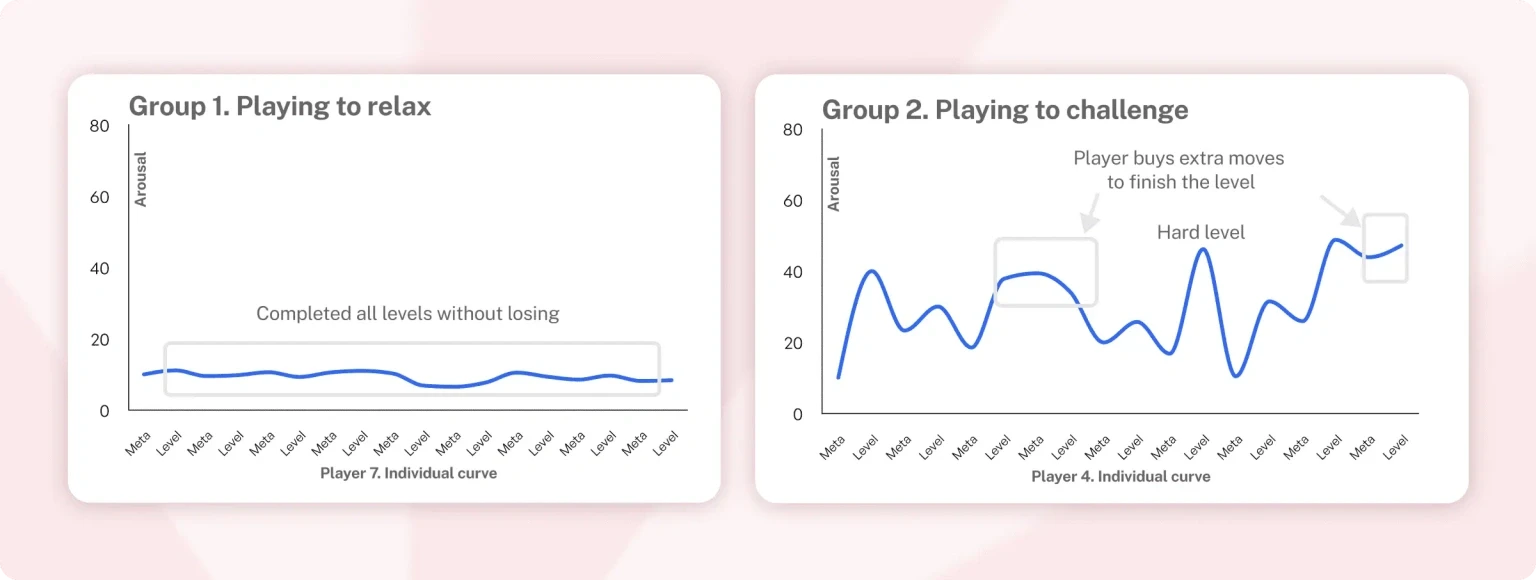
The balance between relaxation and intensity
Royal Match operates on controlled oscillation:
Early sessions are calming and accessible.
Difficulty increases gradually.
Hard levels create emotional peaks.
Easier levels provide recovery.
This pacing produces sustained engagement rather than constant pressure.
Special “King’s Nightmare” stages act as milestone events. The ability to skip these levels increases perceived fairness and player autonomy.
Monetisation without hostility
Royal Match differentiates itself through restrained monetisation design.
Key characteristics:
Optional spend structure
Purchases enhance probability of success but are rarely positioned as mandatory.
Generosity-first economy
Frequent rewards reduce early spending pressure and build trust.
Visible near-wins
After failing a level, players often see that a small number of additional moves would secure victory. This increases perceived attainability and raises purchase conversion probability without coercion.
Limited-time events
Timed challenges drive urgency among engaged users while remaining optional.
Delayed monetisation pressure
New players are not confronted with aggressive purchase prompts during onboarding.
The result is a monetisation model that reinforces long-term retention rather than undermining it.
Beyond match-3
The castle-building meta layer expands engagement beyond puzzle mechanics. For new players, it offers clarity and reward. For experienced players, connected events deepen strategic investment.
The system integrates core gameplay, meta progression, and live events into a cohesive loop.
Areas for refinement
Our study also identified moments of friction and engagement decay within specific level structures and pacing sequences. These are detailed in the full report.
No system is frictionless. Sustained success depends on continuous optimisation.
Key lessons for developers
Respect builds retention
Avoid early monetisation pressure. Trust compounds.Oscillate difficulty deliberately
Engagement benefits from rhythm, not constant escalation.Deliver on marketing promises
Alignment between advertising and gameplay strengthens loyalty.Layer meta progression thoughtfully
Secondary systems should reinforce, not distract from, the core loop.
Royal Match demonstrates that disciplined pacing, restrained monetisation, and strong experiential alignment can elevate a familiar genre.
For a full breakdown of emotional mapping, behavioural data, and level-by-level analysis, access the complete Emhance report.
To explore how this methodology applies to your own title, request a demo.